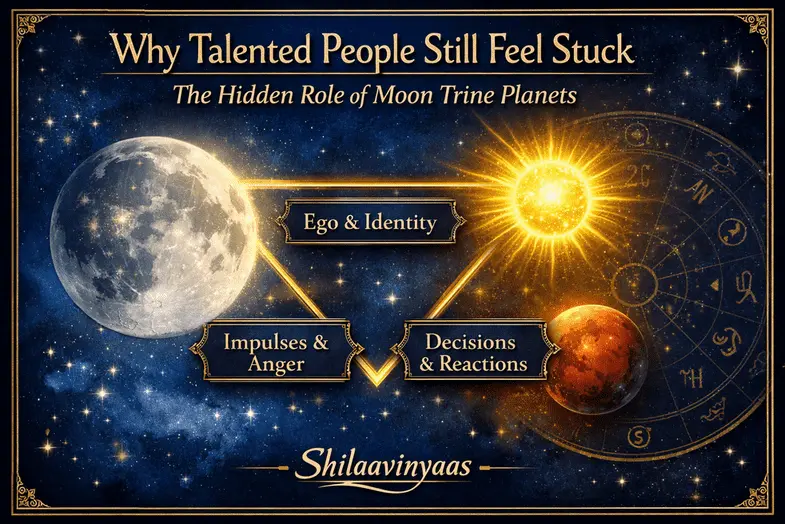
Many people experience a strange contradiction in life. They know what needs to be done. They understand their mistakes. They have talent, strength, and potential. Yet progress remains slow, inconsistent, or completely blocked. When they look around, they often feel that others with lesser capability rise faster, while they remain stuck at the same place.
Astrology explains this paradox through the condition of the Moon in the horoscope.
The Moon does not represent luck, wealth, or external success. The Moon represents the mind, emotional stability, mood, and mental response to situations. When the Moon is disturbed, afflicted, or overstimulated, a person may have strong yogas in the chart but still fail to act at the right time.
This blog explains how the Moon works in a horoscope, how it gets affected, and how different Moon conjunctions shape personality, behavior, relationships, health patterns, and life decisions.
Why the Moon Is the Most Important Planet in a Horoscope
The Moon directly governs:
- Mindset and emotional reactions
- Mood stability and impulsive behavior
- Learning capacity and mental focus
- Stress handling and resilience
- Ability to stay calm under pressure
- Presence in the present moment
History shows that people who rise in sports, business, leadership, or creativity are not necessarily the most talented. They are the ones who can control their emotions and mental state regardless of the situation.
A disturbed Moon leads to procrastination, overthinking, anxiety, fear, impulsive decisions, and emotional confusion. Until the Moon is understood and managed, no amount of yogas or remedies work effectively.
How to Analyze the Moon in Your Horoscope
Moon analysis should be done systematically. It is not limited to checking the Moon sign alone.
Step 1: Planets in the Same House as the Moon
Check whether the Moon is sitting with any planet in the same house.
- Sun
- Mars
- Mercury
- Jupiter
- Venus
- Saturn
- Rahu
- Ketu
If any planet is conjunct with the Moon, the Moon gets influenced by that planet’s nature.
Degree difference also matters. A planet closer in degree has stronger impact on the Moon.
Step 2: Trine Influence on the Moon
Check planets placed:
- 5th house from the Moon
- 9th house from the Moon
These trinal placements strongly influence the Moon’s behavior, thinking pattern, and emotional reactions.
Step 3: Aspect on the Moon
Check the 7th house from the Moon.
If any planet aspects the Moon directly, it strongly affects mental balance even if no planet is conjunct.
Special Case: Isolated Moon
If the Moon has:
- No conjunction
- No trine influence
- No direct aspect
This forms a special mental configuration. Such people have a unique emotional pattern which depends heavily on the house and sign placement of the Moon.
Moon and Mars: Impulsive Mind and Emotional Aggression
This combination creates a mind that reacts faster than it thinks.
Key Characteristics
- Impulsive decision making
- Quick anger and emotional outbursts
- Regret after reaction
- Defensive behavior when criticized
- Emotional arguments
- Strong protectiveness in relationships
Such people often shop impulsively, speak harshly in the heat of the moment, and later feel guilty.
Positive Side
- Fearless mindset
- Courage under pressure
- Ability to stand firm in crisis
- High physical and mental energy
Health Patterns
- Headaches
- Blood pressure fluctuations
- Sleep disturbances
- Skin issues like acne and rashes
Practical Balance Approach
Physical activity is essential. Regular exercise, walking, yoga, and controlled breathing help channel excess mental energy into productive outlets.
Moon and Mercury: Overthinking and Mental Restlessness
This combination creates a sharp but restless mind.
Key Characteristics
- Continuous thinking and mental replay
- Procrastination until deadlines
- Overanalysis of conversations
- Difficulty switching off the mind at night
- Delayed decisions
Strengths
- Brilliant intelligence
- Fast learning ability
- Strong communication skills
- Writing, teaching, sales, and analytical talent
Weaknesses
- Mental exhaustion
- Emotional confusion
- Saying things that unintentionally hurt others
- Avoidance during emotional pressure
Practical Balance Approach
Discipline is essential. Fixed sleep timing, morning routines, sunlight exposure, and structured daily planning help stabilize this combination.
Moon and Jupiter: Emotional Maturity with Blind Trust
This is one of the most balanced Moon combinations.
Key Characteristics
- Emotional maturity
- Forgiving nature
- Spiritual inclination
- Moral values and faith
- Calm emotional responses
Strengths
- Strong intuition
- Teaching and advisory capability
- Balanced emotional outlook
- Stable family values
Challenges
- Excessive trust in others
- Ignoring red flags in relationships
- Over-optimism
- Emotional boundaries can be weak
Despite challenges, this is one of the least harmful Moon combinations and often creates wisdom with age.
Moon and Venus: Comfort Seeking Mind
This combination links emotional peace with comfort and pleasure.
Key Characteristics
- Strong desire for comfort
- Emotional eating
- Love for beauty, luxury, and aesthetics
- Emotional dependence in relationships
Strengths
- Artistic creativity
- Emotional charm
- Strong imagination
- Loving and caring nature
Challenges
- Difficulty handling loneliness
- Spending money to escape emotional discomfort
- Relationship dependency
- Mood swings after breakups
Emotional independence is the key lesson for this combination.
Moon and Saturn: Emotional Suppression and Mental Heaviness
This is one of the most challenging Moon combinations.
Key Characteristics
- Emotional reserve
- Serious mindset from a young age
- Feeling lonely even among people
- High sense of responsibility
- Self blame
Strengths
- Strong discipline
- Mental endurance
- Long-term stability
- Ability to handle hardship
Challenges
- Emotional coldness
- Depression tendencies
- Loss of joy in daily activities
- Difficulty expressing emotions
Learning to express emotions and ask for support is critical for this Moon placement.
Moon and Rahu: Obsession and Anxiety Driven Mind
This combination creates intense mental activity.
Key Characteristics
- Obsessive thinking
- Sudden emotional attachments
- Anxiety before new steps
- Overthinking imaginary problems
- Emotional confusion
Strengths
- Creative thinking
- Strong intuition
- Interest in technology, media, and innovation
- Foreign connections
Challenges
- Emotional instability
- Trust issues
- Fear driven decisions
- Difficulty staying present
Grounding practices and reality checks are essential for balance.
Moon and Ketu: Emotional Detachment and Inner Turmoil
This is a deeply internal combination.
Key Characteristics
- Emotional withdrawal
- Difficulty expressing feelings
- Feeling misunderstood
- Preference for solitude
Strengths
- High intuition
- Spiritual depth
- Emotional independence
- Deep thinking
Challenges
- Emotional isolation
- Difficulty forming close bonds
- Inner restlessness despite outward calm
This combination often finds peace through spirituality and self awareness.
Moon and Sun: Ego and Emotion Intertwined
This combination merges identity with emotions.
Key Characteristics
- Strong personal opinions
- Emotional rigidity
- Difficulty accepting opposing views
- Need for appreciation
Strengths
- Leadership qualities
- Strong self identity
- Emotional strength
- Authority presence
Challenges
- Emotional inflexibility
- Relationship misunderstandings
- Self justification tendencies
Learning emotional flexibility is the key lesson here.
Final Insight: Fix the Moon, Fix Life Direction
The Moon controls mental response, not external events. When the Moon is unstable, even strong horoscopes fail to deliver results. When the Moon is balanced, individuals naturally take the right decisions at the right time.
Understanding Moon combinations is not about fear. It is about awareness. Awareness creates control. Control creates clarity. Clarity creates progress.
A stable Moon does not change destiny. It allows destiny to unfold properly.

Leave a comment
Your email address will not be published. Email is optional. Required fields are marked *